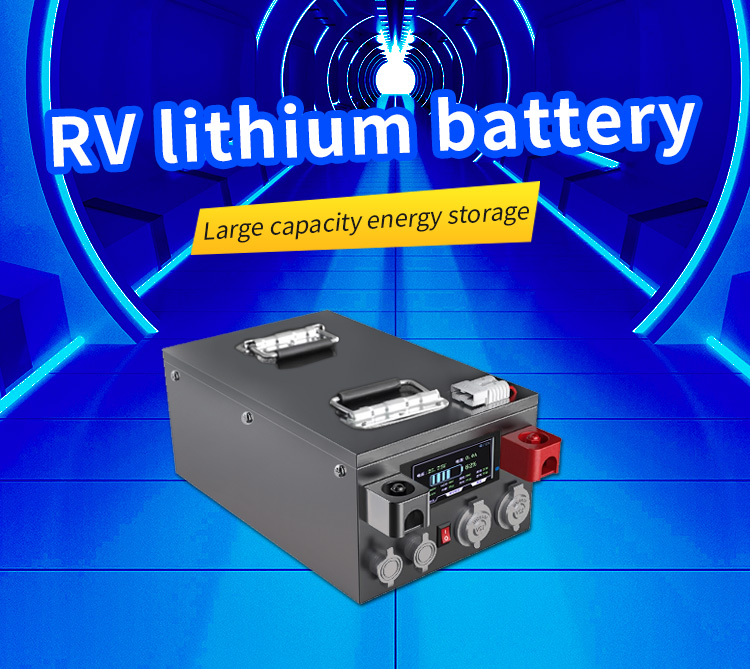

When evaluating the viability of Battery Energy Storage Systems (BESS), one of the most critical questions investors, utilities, and project developers ask is: how often do these systems fail? Unlike a simple consumer battery, a grid-scale BESS is a complex assembly of thousands or even tens of thousands of individual cells, along with thermal management systems, power conversion systems, battery management systems (BMS), and control software. The answer to the failure rate question is not a single number—it depends on chemistry, design, operation, and how one defines “failure.”
Defining Failure: What Counts?
Before discussing rates, it is essential to distinguish between different types of failure. A catastrophic failure involves thermal runaway, fire, explosion, or permanent destruction of assets. These events are rare but carry significant safety and financial consequences. A degradation failure occurs when a cell or module loses enough capacity (typically 20-30% of rated capacity) that it no longer meets performance specifications—this is the most common form of failure in BESS and is often considered normal end-of-life rather than premature failure. A balance-of-plant failure involves auxiliary components: cooling pumps fail, contactors weld shut, sensors drift out of calibration, communication links drop. These do not destroy the battery but can force the system offline until repaired. Finally, an operational failure refers to the system being unable to deliver its committed power or energy when called upon, whether due to internal faults or software errors.
Given these definitions, any meaningful answer about failure rates must specify which type of failure is being discussed.
Industry Benchmark Data
For lithium-ion BESS—the dominant chemistry in grid-scale applications—manufacturers typically target an annual cell-level failure rate of 1% to 2% under normal operating conditions. In practice, real-world data from large-scale installations shows variation:
- Top-tier systems with rigorous quality control, active liquid cooling, conservative state-of-charge windows (e.g., 10-90% rather than 0-100%), and moderate cycling depths often achieve annual cell failure rates below 1%. Some premium systems report cumulative failure rates of only 2-3% over a 10-year operational life.
- Mid-range systems with air cooling, aggressive charge-discharge schedules, and less sophisticated battery management typically see annual failure rates in the range of 2% to 4%.
- Poorly designed or aggressively operated systems—especially those in harsh thermal environments without adequate cooling, or those subjected to multiple deep cycles per day—can experience failure rates exceeding 5% annually. In extreme cases, some early-generation projects saw cumulative cell failure rates approaching 15-20% within five years.
It is important to note that cell failures are rarely distributed evenly. The well-known bathtub curve applies to BESS: failure rates are slightly higher during the first few months of operation (infant mortality due to manufacturing defects), then drop to a low steady-state level for several years, and finally rise again as cells approach end-of-life due to calendar and cycle aging.
Beyond Cells: System-Level Failures
Cell failures alone tell only part of the story. Balance-of-plant components often fail more frequently than the cells themselves. Industrial data suggests that:
- Cooling system components (pumps, fans, valves) have annual failure rates of 3-5%
- Contactors and relays: 2-4% annually
- Voltage and temperature sensors: 1-3% annually
- Communication and control boards: 1-2% annually
However, most of these component failures are non-catastrophic and can be addressed through routine maintenance. A failed cooling pump, for example, does not destroy the battery—it forces the system to derate or shut down until the pump is replaced. Good system design incorporates redundancy, allowing the BESS to continue operating at reduced capacity even when some components fail.
Catastrophic Failure Rates
Thermal runaway events—where a cell enters an uncontrollable self-heating state that can propagate to adjacent cells, leading to fire—are extremely rare in well-designed grid-scale BESS. Industry studies estimate the annual catastrophic failure rate per cell at roughly 1 in 1 million to 1 in 10 million cell-years. For a 100 MWh system containing approximately 500,000 cells (using typical 200 Ah prismatic cells), this translates to an expected catastrophic event once every 2 to 20 years. In practice, most large BESS operators report zero catastrophic failures over multi-year operational histories, though high-profile incidents (e.g., the 2021 Surprise, Arizona fire at an APS facility) demonstrate that the risk is real and requires rigorous safety engineering.
A Better Metric: Availability
Because failure rates are fragmented across components and failure types, the energy industry increasingly prefers a higher-level metric: system availability. Availability measures the percentage of time the BESS is able to perform its intended function, whether that is charging, discharging, or providing ancillary services.
Leading BESS projects report availability figures of 98% to 99% on an annual basis. This means the system is fully functional for all but 3 to 7 days per year. Downtime typically results from scheduled maintenance, software upgrades, grid constraints, or minor component failures—not catastrophic events. A 98-99% availability rate is comparable to or better than many conventional power plants, particularly older coal or gas peaker plants.
Factors That Influence Failure Rates
Several key variables determine whether a given BESS will fall on the low end or high end of failure rate ranges:
- Chemistry: Lithium iron phosphate (LFP) generally has lower catastrophic failure rates than nickel manganese cobalt (NMC) due to its more stable crystal structure. LFP also tends to have longer cycle life.
- Thermal management: Liquid cooling systems maintain more uniform cell temperatures and lower peak temperatures than air cooling, significantly reducing degradation and failure rates.
- Depth of discharge: Shallow cycles (e.g., 20-80% state of charge) dramatically extend cell life compared to full 0-100% cycles. Many profitable BESS projects intentionally limit depth of discharge to balance revenue generation against longevity.
- C-rate: Operating at lower charge/discharge rates (e.g., 0.5C instead of 2C) reduces internal heat generation and mechanical stress, lowering failure rates.
- Quality assurance: Stringent factory testing, module matching (ensuring cells within a module have similar capacity and impedance), and robust battery management systems significantly reduce early-life and mid-life failures.
Conclusion
There is no single answer to the failure rate of BESS. For cell-level degradation failures, 1-3% annually is typical for well-designed systems; for catastrophic failures, the rate is orders of magnitude lower—on the order of one event per several thousand megawatt-years. A more practical perspective is that modern BESS, when properly engineered and operated, achieves availability rates of 98-99%, making them reliable assets for grid services. The industry continues to improve, with second-life and third-life projects benefiting from lessons learned in early deployments. For investors and operators, the key is not to fixate on a single failure rate number, but to understand the factors that drive failures and to design, operate, and maintain systems to minimize them.