
What Solar Panels Actually Do
Solar panels are devices that convert sunlight directly into electricity using the photovoltaic effect, a phenomenon discovered over 180 years ago. Each panel contains dozens of individual solar cells made primarily from silicon, sandwiched between protective layers of glass and polymer. When photons from sunlight strike the silicon, they knock electrons loose and create an electric current that can power homes, businesses, and entire communities.
The photovoltaic effect works because silicon is a semiconductor with a carefully engineered internal electric field. Negatively charged electrons and positively charged holes are separated by this field, then collected by metal contacts on the cell’s front and back. This flow of charge becomes usable direct current (DC) electricity, which an inverter later converts to alternating current (AC) for household use.
Types of Solar Panels
Monocrystalline panels are made from single-crystal silicon and currently dominate the residential market with efficiencies between 20% and 23%. Their uniform dark black appearance comes from the absence of grain boundaries that would otherwise scatter electrons and reduce performance. Though more expensive to manufacture, monocrystalline panels require less roof space for the same output, making them ideal for homes with limited installation area.
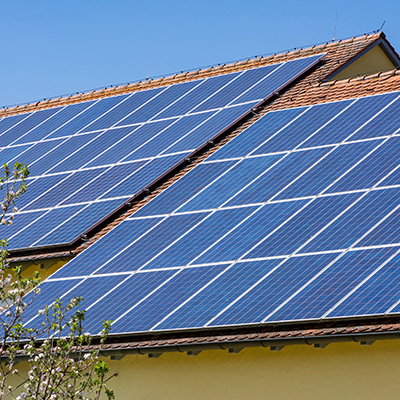
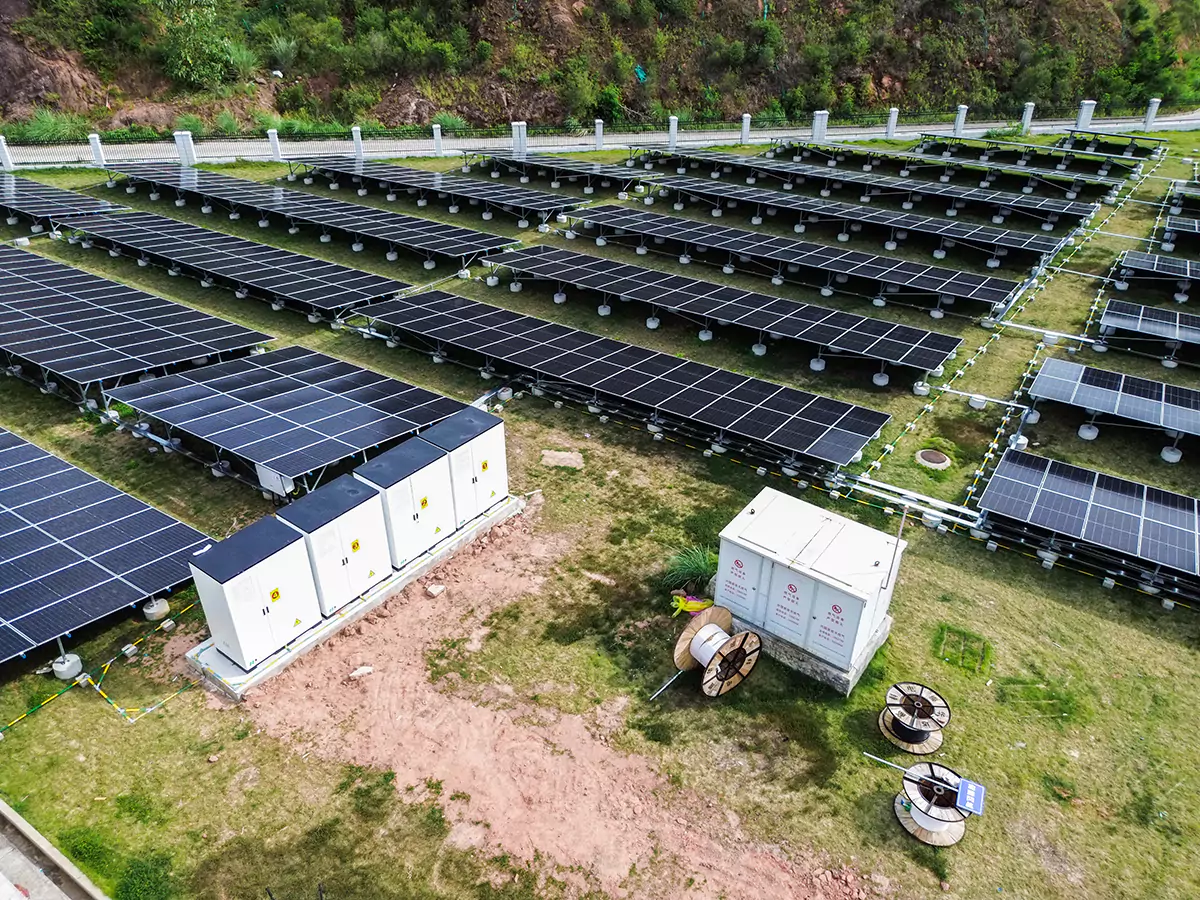
Polycrystalline panels are produced by melting silicon fragments together and casting them into square blocks. Grain boundaries between crystals give these panels their characteristic blue speckled look and slightly lower efficiency of 15% to 17%. Because manufacturing is simpler and waste silicon can be reused, polycrystalline panels cost less per watt and remain popular in large ground-mounted projects where space is abundant.
Thin-film panels use layers of semiconductor material only a few micrometers thick, deposited on glass or flexible backing. Cadmium telluride and copper indium gallium selenide are the most common thin-film technologies, achieving efficiencies of 10% to 13%. While less efficient than crystalline panels, thin-film options excel in high-temperature conditions and can be made semi-transparent or flexible for specialized applications like building-integrated windows.
How Efficiency Is Measured
Efficiency describes how much of the sunlight hitting a panel gets converted into usable electricity. A panel rated at 20% efficiency turns one-fifth of incoming solar energy into power, while the rest is lost as heat or reflected away. Higher efficiency means more watts per square meter, which matters greatly when installation space is constrained or expensive.
Temperature coefficient measures how much a panel’s output drops as it heats up during operation. Most panels lose about 0.3% to 0.4% of their rated power for every degree Celsius above 25°C. This explains why panels perform better on cold, sunny days than on hot ones, and why proper mounting with airflow behind the panels improves real-world output.
Degradation rate tells you how quickly a panel loses capacity over its lifetime. Typical crystalline panels degrade about 0.5% per year, meaning they still produce roughly 85% of original output after 30 years. Manufacturers back this performance with warranties guaranteeing a minimum percentage of rated power over 25 to 30 years.
Installation Considerations
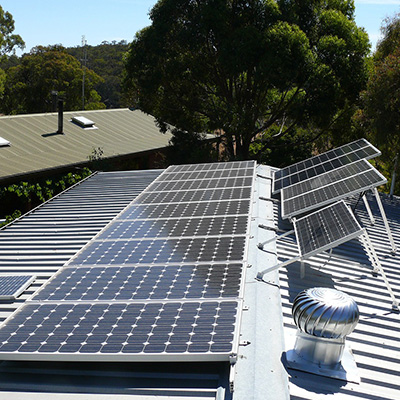
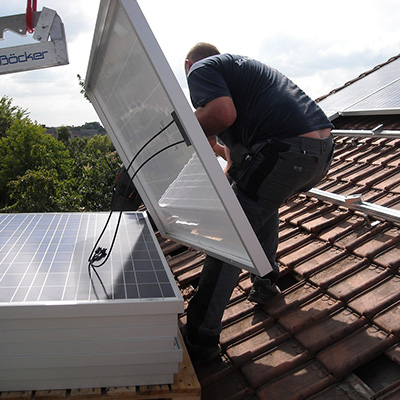
Roof orientation and tilt angle determine how much sunlight a panel array captures throughout the day and year. In the northern hemisphere, panels should face true south, while southern hemisphere installations face true north. Optimal tilt usually equals the local latitude, though adjusting a few degrees steeper can boost winter production when the sun sits lower in the sky.
Shading from trees, chimneys, and neighboring buildings can dramatically reduce output, sometimes cutting a whole array’s production by more than half. Even partial shading on one panel can drag down the performance of an entire string if panels are wired in series. Modern systems use power optimizers or microinverters to isolate shaded panels and keep the rest operating at full capacity.
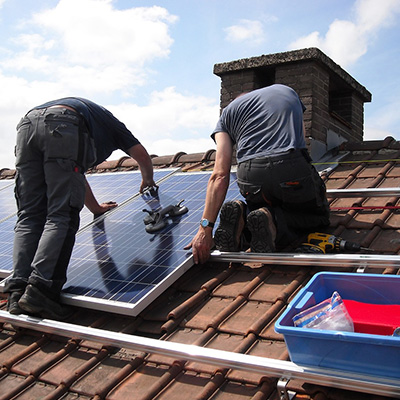
Mounting systems must withstand wind, snow, and thermal expansion over decades of outdoor exposure. Roof mounts use flashing and brackets to protect against leaks, while ground mounts rely on concrete ballast or driven piles. Trackers that follow the sun across the sky can boost production by 15% to 25% but add cost and mechanical complexity.
Maintenance and Longevity
Cleaning panels periodically removes dust, pollen, and bird droppings that block sunlight and reduce output. Rain handles most cleaning in temperate climates, but dusty or agricultural areas may require manual washing several times a year. Always use soft brushes and plain water, since abrasive cleaners can scratch the anti-reflective glass coating.
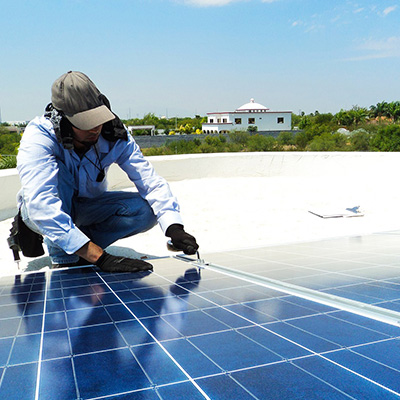
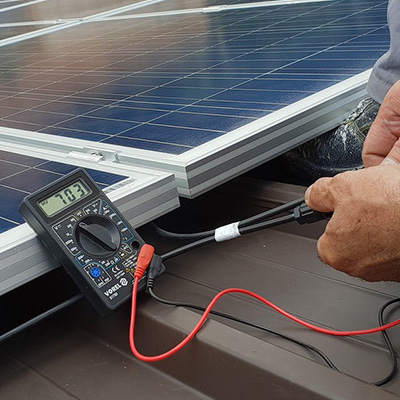
Inspection of wiring, connectors, and mounting hardware catches problems before they become expensive failures. Loose MC4 connectors can arc and melt, while corroded grounding points create safety hazards. Annual checks by a qualified professional keep systems running safely and maintain warranty compliance.
Inverters typically need replacement once during a panel’s 30-year life, usually around year 10 to 15. String inverters cost less upfront but fail as a single point, while microinverters last longer and offer panel-level monitoring. Monitoring apps alert homeowners to sudden output drops, helping distinguish between dirt, shading, and equipment faults.
Cost, Savings, and Payback
Installed costs for residential solar have fallen over 70% in the past decade, now averaging $2.50 to $3.50 per watt before incentives. A typical 6 kW system therefore costs $15,000 to $21,000, though federal and state incentives can cut that by 30% or more. Battery storage adds $8,000 to $15,000 but provides backup power and lets homeowners store excess generation for evening use.
Electricity bill savings depend on local rates, system size, and how much solar power is consumed on-site versus exported. Homeowners in high-rate markets like California or Massachusetts often save $1,000 to $2,000 annually. Where net metering pays full retail rate for exports, payback periods shrink to 5 to 7 years.
Financing options include cash purchase, solar loans, leases, and power purchase agreements. Cash buyers capture the full return but need upfront capital, while leases and PPAs require no money down but deliver smaller lifetime savings. Property assessed clean energy programs let homeowners repay system costs through property taxes over 10 to 20 years.
Common Myths and Misconceptions
Solar panels do not need bright sunshine to generate power—they work on cloudy days at reduced output. Germany, hardly a sun-drenched country, leads the world in installed solar capacity per capita. Diffuse sunlight still contains photons, and modern panels capture enough of them to offset a meaningful portion of household demand even under overcast skies.
Panels are far more durable than many people assume, surviving hail, high winds, and temperature swings for decades. Manufacturers test panels by firing ice balls at 50 mph and cycling them through extreme heat and cold hundreds of times. Most quality panels carry 25-year product warranties covering defects and premature degradation.
Solar does not require a backup battery to function, though batteries add resilience during outages. Grid-tied systems automatically shut down during blackouts to protect utility workers, so homeowners wanting outage protection need storage. Hybrid systems combine solar, batteries, and grid connection to deliver both savings and security.
The Future of Solar Panels
Perovskite solar cells are emerging as a potential game-changer, with lab efficiencies already exceeding 33% when stacked on silicon. These materials are cheap to produce and can be tuned to absorb different light wavelengths than silicon. Commercial perovskite-silicon tandem panels may reach the market within a few years, pushing efficiency toward 40%.
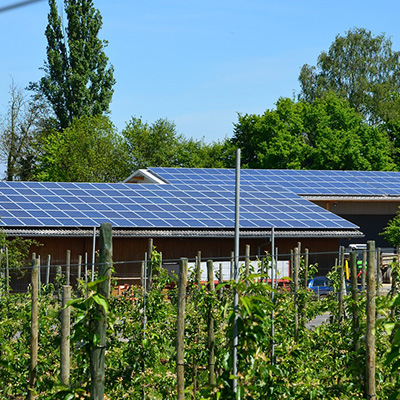
Bifacial panels capture sunlight on both front and back surfaces, boosting output by 5% to 15% depending on ground reflectivity. They work especially well over light-colored surfaces like sand, snow, or white roofing. Agricultural installations and ground-mounted arrays are the fastest-growing applications for bifacial technology.
Recycling infrastructure is scaling up to handle the millions of panels that will reach end-of-life in the 2030s. Today over 90% of a panel’s glass, aluminum, and copper can be recovered, though silicon and silver recovery remains challenging. Industry groups are pushing for mandatory recycling standards to keep valuable materials out of landfills.
Powering the Transition
Solar panels have moved from niche curiosity to mainstream energy source in just two decades, driven by falling costs and rising climate urgency. They now generate more electricity worldwide than every nuclear plant combined and continue growing faster than any other power source. For millions of homes and businesses, solar has become the cheapest way to produce electricity during daylight hours.
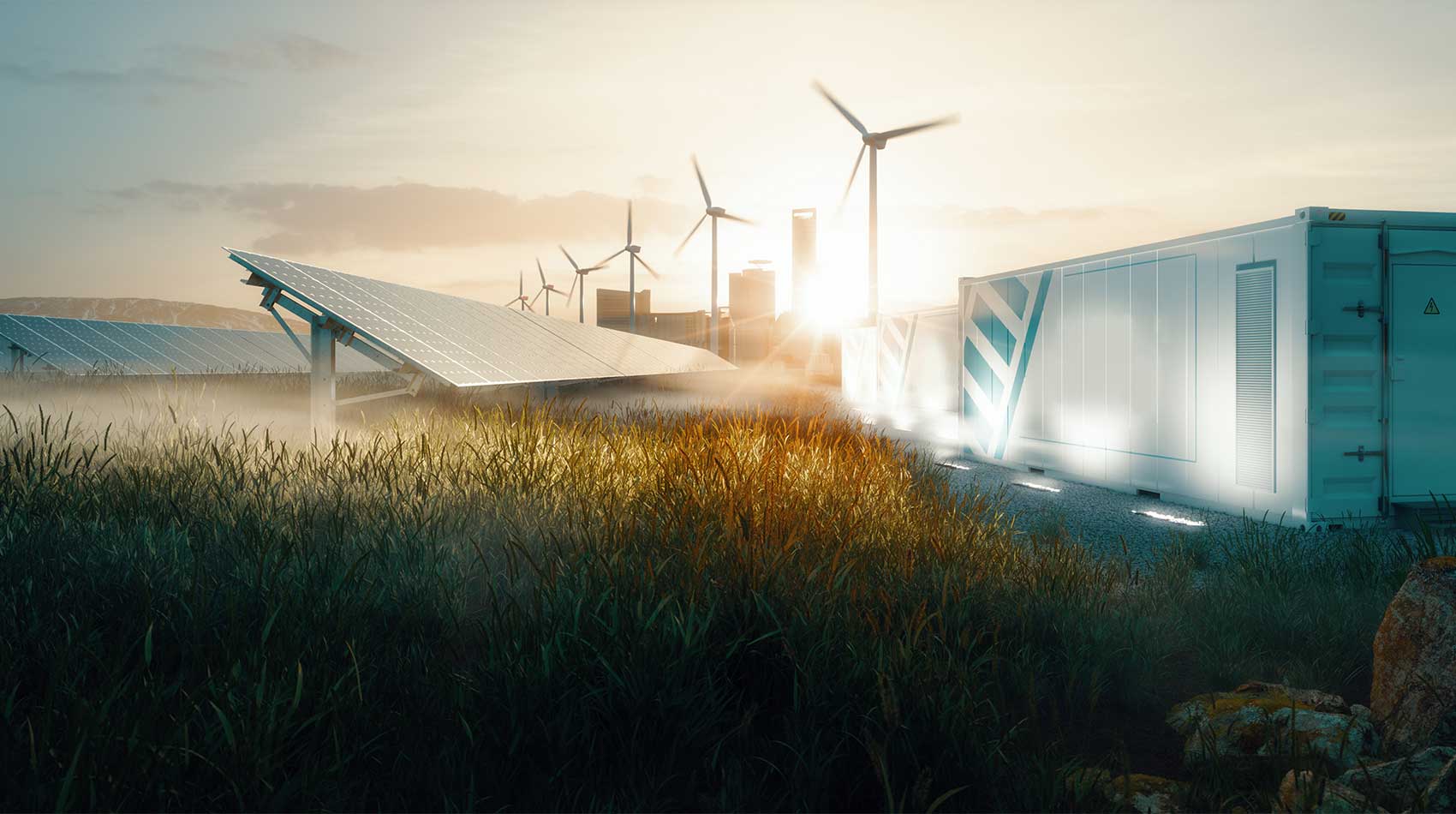
Choosing solar means more than cutting a utility bill—it means owning your power production and insulating yourself from future rate increases. Pairing panels with batteries and electric vehicles creates a fully integrated home energy system that pays dividends for decades. As storage costs fall and grid rules evolve, the value of self-generated solar will only grow stronger.
The future of solar panels is not just about better technology but about wider access. Community solar programs, solar co-ops, and financing innovations are bringing clean power to renters, low-income households, and small businesses. When everyone can participate in the solar transition, the benefits multiply across entire communities rather than concentrating among early adopters.