
As energy prices continue to rise and power outages become more frequent, many homeowners are asking a compelling question: Can home battery storage power my entire house? The short answer is: it depends — on the size of your battery, your home’s energy consumption, and what you mean by “power the whole house.”
Let’s break down the facts so you can determine whether a home battery system is capable of keeping your lights on, your refrigerator running, and your air conditioner humming — all at the same time.
What Does “Power My Whole House” Actually Mean?
Before we dive into technical specifications, it’s important to clarify what “powering the whole house” means in practice. For most homeowners, there are three possible interpretations:
| Scenario | Description | Battery Requirement |
|---|---|---|
| Full backup | Run every appliance, device, and system in your home simultaneously — just like when connected to the grid | Very high (30kWh+) |
| Essential loads backup | Keep critical circuits running (lights, refrigerator, internet, medical equipment, sump pump) | Moderate (10-20kWh) |
| Time-of-use shifting | Run the house from battery during peak rate hours, recharge from grid or solar during off-peak | Variable (10-20kWh) |
For most homeowners, the realistic goal is essential loads backup — not running the clothes dryer and air conditioner at the same time during an outage, but keeping the house livable and safe.
The Key Factor: Your Home’s Energy Demand
The most critical variable is how much electricity your home actually uses. Let’s look at typical power consumption:
Typical Appliance Power Draw
| Appliance | Running Power (Watts) | Surge Power (Start-up) |
|---|---|---|
| LED light bulb | 5-10W | None |
| Refrigerator | 100-200W | 600-1200W |
| Sump pump | 800W | 1500-2000W |
| Microwave | 1000-1500W | None |
| Washing machine | 500-1000W | 1500-2000W |
| Clothes dryer | 3000-5000W | Minimal |
| Electric oven | 3000-6000W | Minimal |
| Air conditioner (central, 3-ton) | 3500W | 6000-8000W |
| Electric water heater | 4000-5000W | Minimal |
| EV charger (Level 2) | 7000-11000W | Minimal |
Daily Energy Consumption
An average American home uses about 30 kWh per day. However, this varies significantly:
- Small apartment (1-2 people) : 10-15 kWh/day
- Average single-family home : 25-35 kWh/day
- Large home with electric heating/EV : 50-80+ kWh/day
Battery Capacity: How Much Do You Need?
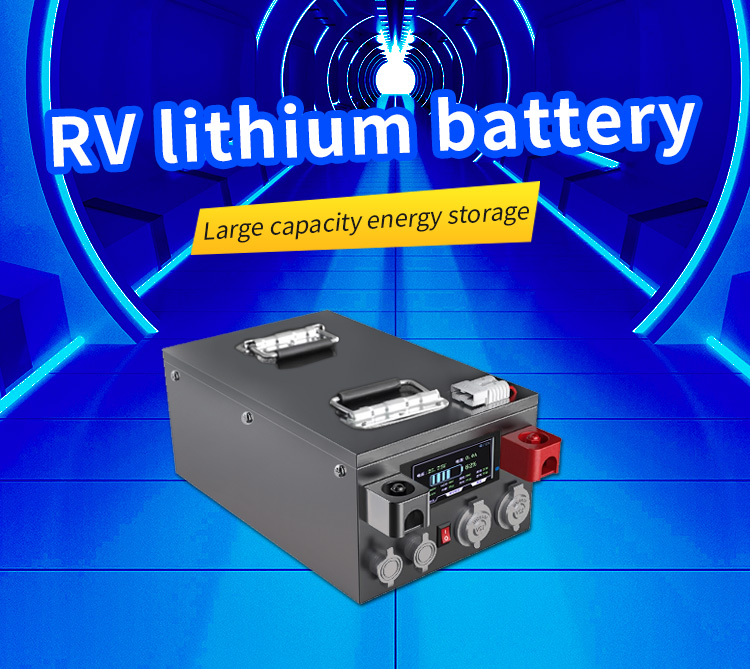
Home batteries are rated in kilowatt-hours (kWh) — the total amount of energy they can store and deliver. Here are the capacities of popular home batteries:
| Battery Model | Usable Capacity | Can It Power an Average Home for 24 Hours? |
|---|---|---|
| Tesla Powerwall 3 | 13.5 kWh | No — about half a day |
| Enphase IQ Battery 5P | 5.0 kWh | No — 4-6 hours of essential loads |
| LG Chem RESU Prime | 16 kWh | Partial — 12-16 hours with careful use |
| Generac PWRcell (minimum) | 9 kWh | Partial — 8-10 hours |
| Generac PWRcell (maximum) | 36 kWh | Yes — full 24 hours for average home |
| Franklin Whole Home | 13.6 kWh | No — about half a day |
| Sonnen Eco (large) | 20 kWh | Partial — 16-18 hours |
The reality: A single standard home battery (10-15 kWh) will not power an entire average American home for a full day. It will cover essential loads for 12-24 hours, or run the whole house for 4-8 hours.
Three Critical Technical Limitations
Even with a large battery, several factors limit your ability to run the whole house:
1. Peak Power (Surge Capacity)
Many appliances require a surge of power when starting up — especially motors in refrigerators, air conditioners, well pumps, and sump pumps. Your battery must be able to deliver this surge, even if only for a few seconds.
A battery with 10 kWh of energy might only have a peak output of 5-7 kW. If your air conditioner needs 8 kW to start, the battery will trip its internal breaker and shut down.
2. Continuous Power Rating
This is the maximum power the battery can deliver steadily. For example:
- Tesla Powerwall 3: 11.5 kW continuous
- Enphase IQ 5P: 3.8 kW continuous
If your home’s simultaneous load exceeds the continuous rating, the battery will overload. Running a microwave (1,500W) + refrigerator (200W) + lights (200W) + TV (150W) + computer (100W) is fine — but adding a clothes dryer (4,000W) would exceed a 3.8 kW battery’s limit.
3. System Integration: Whole-Home vs. Sub-Panel Backup
There are two ways to wire a battery to your home:
| Wiring Method | What It Does | Pros | Cons |
|---|---|---|---|
| Sub-panel (critical loads) | Battery only powers selected circuits | Lower cost, smaller battery works | Non-essential loads (dryer, oven, EV) won’t work during outage |
| Whole-home (main panel) | Battery can power everything, with load management | Maximum flexibility | Requires larger battery, load-shedding automation, higher cost |
Most homes with a single battery use a sub-panel for essential loads. Whole-home backup typically requires multiple batteries or a very large single battery (30kWh+).
Realistic Scenarios: What Can You Actually Run?
Let’s look at three common battery configurations and what they can realistically power:
Scenario A: Single 10-15 kWh Battery (e.g., Tesla Powerwall 3)
With essential loads panel (recommended):
- Lights throughout the house
- Refrigerator and freezer
- Sump pump and well pump
- Internet router and modem
- Phone and laptop chargers
- Gas furnace fan (not electric heat)
- TV and entertainment system
- Duration: 12-24 hours
Attempting whole-home backup (not recommended):
- Everything above, PLUS:
- Electric oven/stove
- Clothes dryer
- Air conditioner (if small and soft-start equipped)
- Duration: 2-4 hours (battery depleted quickly)
Scenario B: Two Batteries (20-30 kWh total, e.g., 2x Powerwall)
With whole-home backup + load management:
- All of the above, plus:
- Air conditioner (with soft-start kit)
- Electric water heater (if managed)
- Electric oven (limited use)
- Duration: 12-24 hours of normal usage, longer if careful
Scenario C: Three+ Batteries (40+ kWh total)
Full whole-home backup:
- Everything in your home, including EV charging (reduced rate)
- Central AC, electric dryer, oven all usable simultaneously
- Duration: 24-48 hours or more with solar recharging
The Game-Changer: Solar + Battery Combined
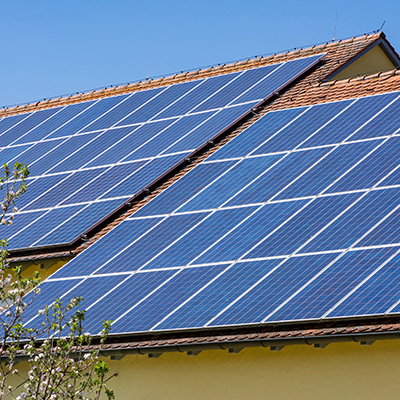
A battery alone is just storage — once it’s empty, it’s empty. But when paired with solar panels, the system becomes sustainable indefinitely (during sunny conditions).
Here’s how it works during an outage:
- Daytime: Solar panels power the home AND recharge the battery
- Nighttime: Battery powers the home
- Next day: Solar recharges the battery again
With sufficient solar and battery capacity, you can achieve energy independence — powering your whole house indefinitely without the grid.
Important note: Not all battery systems can recharge from solar during a grid outage. You need a system with “islanding” capability and a transfer switch that disconnects from the grid when the power goes out.
How to Determine What You Need
Follow these steps to size a system for your home:
Step 1: Review Your Electricity Bills
Look at your daily kWh usage. Your utility bill shows monthly usage — divide by 30 for daily average.
Step 2: Identify Your Must-Have Loads
Make a list of appliances you absolutely need during an outage. Add up their running wattage and estimate daily runtime hours.
Step 3: Calculate Required Battery Size
Formula: Daily essential energy (kWh) × desired backup days = minimum battery capacity (kWh)
Example:
- Essential loads total 0.8 kW running continuously
- Over 24 hours: 0.8 kW × 24h = 19.2 kWh
- For 1 day backup: 20 kWh battery needed
Step 4: Check Peak Power
Add up the surge watts of any appliances that might start simultaneously. Ensure your battery’s peak output exceeds this number.
When a Battery Makes Sense for Whole-Home Power
A home battery is worth considering if:
- You have frequent outages (more than 2-3 per year, especially extended ones)
- You have solar panels and want to maximize self-consumption
- Your utility has expensive peak rates and you want to shift usage
- You have medical equipment or other critical needs requiring backup
- You live in an area with net metering changes that reduce solar payback
A battery may NOT make sense if:
- You have very rare outages (a $1,000 gas generator is more cost-effective)
- Your home has all gas appliances (low electrical load, small battery works but ROI is poor)
- You’re looking for whole-home backup of an all-electric home — you’ll need a very large (expensive) system
- Your utility has reliable power and 1:1 net metering — grid is effectively your battery
Alternatives to Consider
| Option | Pros | Cons | Best For |
|---|---|---|---|
| Portable gas generator | Low cost ($500-2,000), high power | Noise, fumes, fuel storage, maintenance | Rare, short outages |
| Standby gas/propane generator | Automatic, high power, runs as long as fuel lasts | High cost ($5,000-10,000+ installed), fuel dependence, noise | Whole-home backup without solar |
| Home battery only | Silent, instant, no fuel | Limited duration, expensive per kWh | Short outages, solar integration |
| Solar + battery | Infinite during sun, silent, no fuel | Highest upfront cost | Energy independence, long outages, high electricity rates |
The Bottom Line
Can home battery storage power your whole house?
- With a single battery (10-15 kWh) : No — it will power essential loads for 12-24 hours, but not your entire home.
- With two batteries (20-30 kWh) : Possibly — if your home is energy-efficient and you manage heavy loads carefully.
- With three or more batteries (40+ kWh) : Yes — but you’ll pay $30,000+ for the privilege.
For the vast majority of homeowners, the practical answer is: A home battery will not power your entire house the way the grid does, but it will keep your lights on, food cold, and family comfortable during an outage.
The smart approach is to define what you truly need to run during an outage, right-size your battery for those essential loads, and supplement with solar if you want extended backup. Trying to back up every circuit in your home — including the electric dryer, oven, and car charger — quickly becomes an expensive exercise in diminishing returns.
If whole-home backup is your goal, be prepared to invest in a multi-battery system, install load management devices, and potentially convert some electric appliances to gas or high-efficiency heat pumps. For everyone else, a single battery paired with a critical loads panel offers the best balance of capability, cost, and peace of mind.