

Introduction
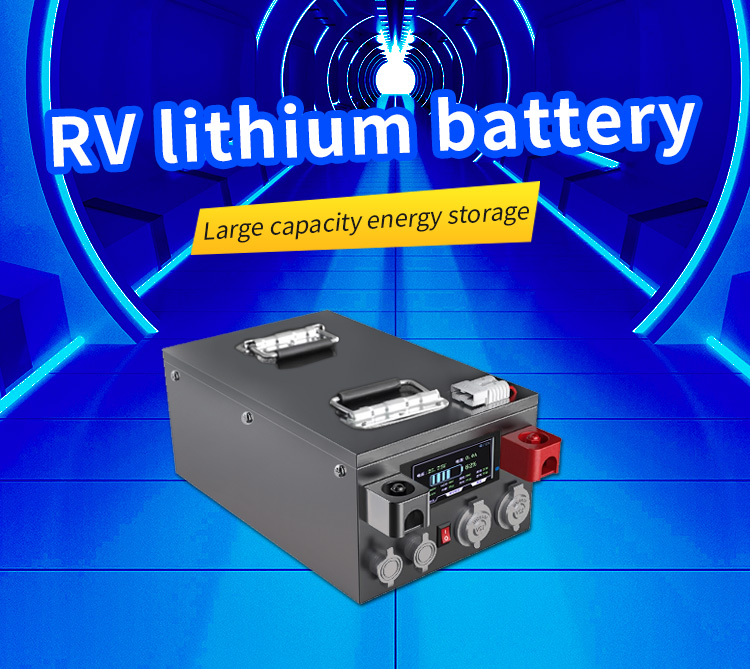
Energy storage batteries have become a hot topic in recent years. From homeowners to large-scale businesses, more people are asking if battery storage pays off.The answer, as with many investments, depends heavily on your specific situation, goals, and local conditions. This article breaks down the key factors that determine whether energy storage batteries are worth the cost.
The Short Answer
For most homeowners, batteries aren’t yet a clear financial win without solar and favorable rates. But for businesses facing high demand charges, or homeowners with frequent outages and time-of-use rates, batteries can pay off. The value proposition is improving rapidly as battery prices continue to fall.
The Financial Perspective
Where Batteries Make Money
Energy storage batteries generate value in several distinct ways:
Time-of-use arbitrage drives residential batteries: charge cheap, discharge at expensive evening rates. Savings depend on the rate difference.A delta of $0.20 per kilowatt-hour or more can make arbitrage worthwhile.
Demand charge reduction applies to commercial and industrial customers. Many businesses pay not only for total energy consumed but also for peak power demand measured in kilowatts. A battery can shave off these peaks, reducing the monthly demand charge. For facilities with sharp demand spikes, battery payback can be 3–5 years.
Solar self-consumption is the most common residential use case. Without a battery, homeowners export excess solar at low wholesale rates and buy back at higher retail rates in the evening.A battery captures that excess solar energy for nighttime use, effectively increasing the value of every kilowatt-hour generated.
Backup power provides non-financial value that can be quantified in terms of avoided losses. For businesses, a few hours of outage can mean thousands of dollars in lost revenue, spoiled inventory, or damaged equipment. Many homeowners will pay for the peace of mind of keeping lights, fridges, and medical devices running during an outage.
Where Batteries Fall Short
In regions without time-of-use rates, where electricity prices are flat throughout the day, arbitrage generates no savings. A battery simply stores and discharges at the same price.
In areas with net metering policies that credit solar exports at the full retail rate, a battery adds little financial value. The grid already functions as an unlimited, lossless battery. Exporting daytime solar and pulling from the grid at night costs nothing extra.
Where electricity is already cheap, the potential savings per kilowatt-hour are too small to recover the battery’s upfront cost within its warranty period. A battery that saves only $0.10 per cycle will struggle to pay back its purchase price.
The Numbers: Residential Economics
Let us walk through a typical residential example to illustrate the math.
A home with a 5 kW solar array and a 10 kWh battery system faces an upfront installed cost of roughly 8,000to12,000 after current tax incentives in many markets. The battery lasts approximately 10 years under daily cycling conditions, or around 3,650 full cycles.
Without the battery, the home exports excess solar at 0.05perkWhandbuyseveningelectricityat0.25 per kWh. Each kilowatt-hour captured and shifted saves 0.20.Witha10kWhbatterythatcyclesfullyeveryday,thedailysavingsamountto2.00. Over a year, that is 730.Overtenyears,7,300.
The Numbers: Residential Economics(二)
This falls short of the 8,000to12,000 upfront cost. The battery does not pay for itself through arbitrage alone. Add in backup power value, perhaps $200 per year in avoided inconvenience or food spoilage, and the numbers come closer but still may not fully justify the purchase purely on financial grounds.
Now consider a commercial user with a peak demand charge of 15perkilowatt.Afacilitywitha500kWpeakcanreducethatpeakby100kWusingabattery.Monthlydemandchargesavingsreach1,500, or $18,000 annually. Combined with time-of-use savings, a medium-sized commercial battery can deliver payback in three to five years.
The Non-Financial Value
Not everything worth doing shows up on a spreadsheet. Energy storage provides value that transcends simple payback calculations.
Energy independence appeals to those who want to decouple from an unreliable grid. A battery paired with solar allows a home to operate autonomously during extended outages. For some, this self-sufficiency is worth paying a premium.
Environmental impact matters to many buyers. A battery increases the fraction of self-generated renewable energy consumed on site, reducing reliance on grid power that may come from fossil fuels. Even in regions with a relatively clean grid, avoiding evening peak generation often displaces the dirtiest marginal power plants.
Grid benefits are collective rather than individual. When many batteries charge during low-demand periods and discharge during high-demand periods, they flatten the overall load curve. This reduces the need for expensive peaker plants and grid infrastructure upgrades. Some markets compensate battery owners for these grid services.

The Changing Landscape
The economics of energy storage are not static. Battery prices have fallen dramatically over the past decade and continue to decline. The chart below illustrates the trend:
| Year | Lithium-ion Battery Pack Price (USD/kWh) |
|---|---|
| 2013 | ~$650 |
| 2016 | ~$400 |
| 2019 | ~$160 |
| 2023 | ~$130 |
| 2026 (estimated) | ~$100 |
Below $100/kWh, many residential systems will become financially viable. Payback could drop from 10–12 years to 5–7 years soon.
Changes in electricity rates also shift the calculus.As utilities shift from net metering to less solar-friendly rates, batteries become more important. In some markets, new solar installations must be paired with batteries to achieve reasonable payback. This is not a coincidence. It reflects a deliberate policy shift toward encouraging storage as a grid resource.
When Are Batteries Worth It?
Based on the factors above, energy storage batteries make the most sense in the following scenarios:
You have or plan solar with weak net metering, wide TOU spreads, or low export rates.
Your utility has high demand charges and sharp peaks a battery can shave.
Your area has frequent outages and you need backup for medical gear, home office, fridge, or sump pump.
You live in a region with high electricity prices, where even modest per-cycle savings accumulate quickly.
You can access incentives (tax credits, rebates, performance payments) that cut upfront costs by 30% or more.
Batteries aren’t worth it with full net metering, flat rates, cheap power, no outages, and no solar.
Conclusion
Are energy storage batteries worth it? For most homeowners, not yet financially worthwhile without solar and favorable rates.The payback period remains longer than many buyers find acceptable.
Batteries offer solid value for businesses with demand charges, homeowners in high-rate, poor-net-metering markets, and backup power seekers.
More importantly, the trend line is clear. Battery prices are falling, electricity rates are rising, and policy support for storage is growing. What is borderline today will be a clear yes within a few years. If you are on the fence, running the numbers for your specific situation is the only way to know. But do not be surprised if the answer is different two years from now than it is today.