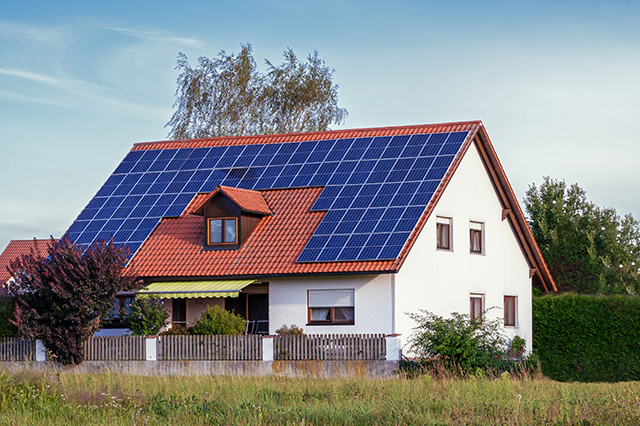
Solar panels, also known as photovoltaic (PV) modules, are the fundamental components that convert sunlight directly into electricity. With the rapid growth of the solar industry, various technologies have been developed to cater to different needs in terms of efficiency, cost, aesthetics, and installation scenarios. This article provides a comprehensive overview of the main types of solar panels available in the market today, explaining their characteristics, advantages, and typical applications.
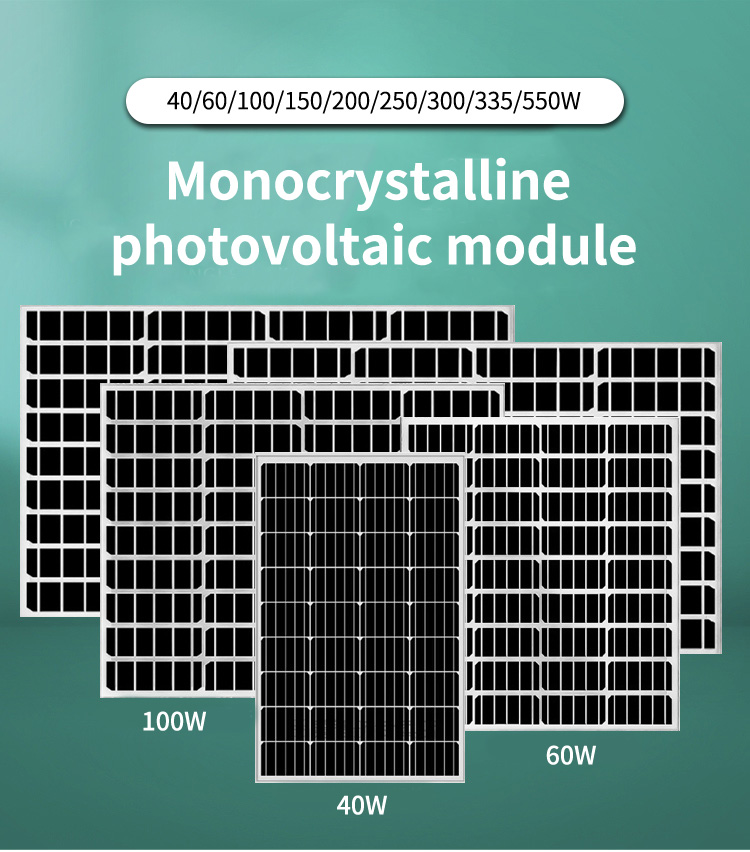
1. Crystalline Silicon Solar Panels: The Market Dominators
Crystalline silicon (c-Si) technology accounts for over 90% of the global PV market. It is divided into two primary categories based on the silicon crystal structure.
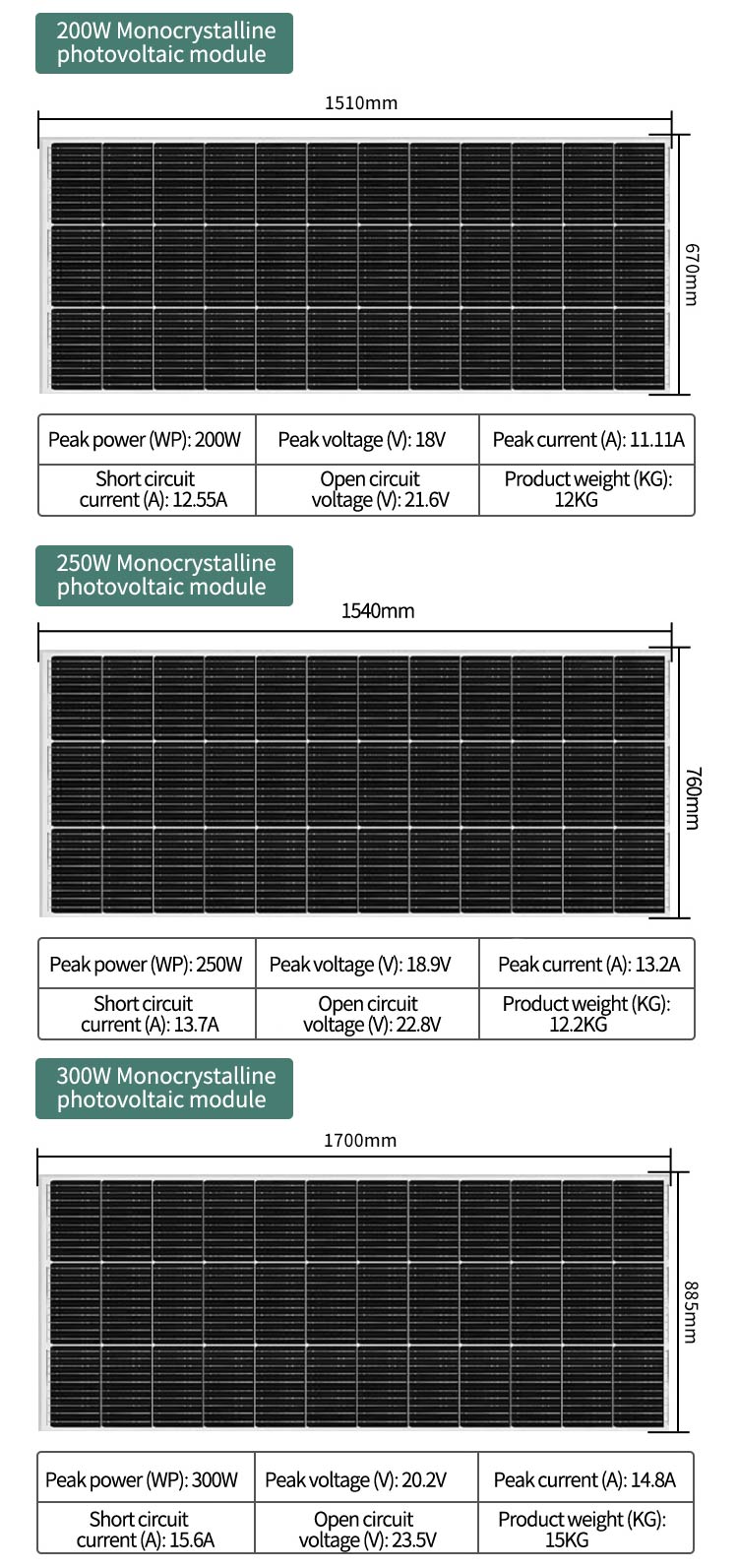
Monocrystalline Silicon Panels (Mono-Si)
These panels are made from single-crystal silicon. High-purity silicon is formed into cylindrical ingots, and the cells are cut from these ingots, giving them their distinctive uniform dark appearance and rounded edges.
- Key Advantages:
- Highest Efficiency: They offer the highest efficiency rates, typically between 18% and 22% for commercial panels, with lab records exceeding 25%. This means they generate more power per square meter.
- Superior Performance in Low Light: They tend to perform better than other types in low-light conditions and high temperatures.
- Long Lifespan: They usually come with the longest warranties, often 25 years or more.
- Disadvantages: The manufacturing process is energy-intensive and complex, making them the most expensive option.
- Best For: Homeowners and businesses with limited roof space who want to maximize energy production, and where budget is a secondary concern.
Polycrystalline Silicon Panels (Poly-Si)
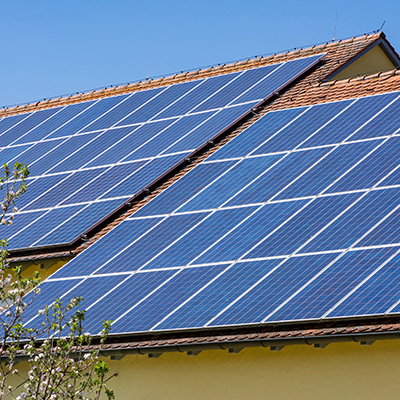
These panels are made by melting raw silicon and pouring it into square molds. The silicon cools and solidifies into multiple crystals, giving the cells a characteristic blue, speckled look.
- Key Advantages:
- Lower Cost: The simpler manufacturing process results in a lower price point compared to monocrystalline panels.
- Reduced Silicon Waste: The production process wastes less silicon material.
- Disadvantages:
- Lower Efficiency: Efficiencies typically range from 15% to 18%.
- Lower Heat Tolerance: They are slightly more sensitive to high temperatures, which can reduce their output slightly more than mono-Si panels.
- Best For: Projects where upfront cost is a major factor and there is ample installation space available.
2. Thin-Film Solar Panels: The Lightweight and Flexible Alternative
Thin-film panels are created by depositing one or more thin layers of photovoltaic material onto a substrate like glass, plastic, or metal. This results in panels that are generally lighter and sometimes flexible.
Common Thin-Film Technologies:
- Amorphous Silicon (a-Si): The oldest thin-film technology. It uses non-crystalline silicon and is less efficient (6-8%) but can perform better in very hot weather. Commonly used in small electronics like calculators.
- Cadmium Telluride (CdTe): The most commercially successful thin-film technology. It offers a good balance of low-cost manufacturing and decent efficiency (10-12%). A leading manufacturer is First Solar.
- Copper Indium Gallium Selenide (CIGS): A promising technology with laboratory efficiencies rivaling polycrystalline silicon. CIGS panels can be made on flexible substrates, opening up unique application possibilities.
Key Advantages of Thin-Film:
- Low-Cost Manufacturing: Potential for very low production costs at high volumes.
- Lightweight & Flexible: Some types can be integrated into building materials (like roofing shingles) or used on curved surfaces.
- Better High-Temperature Performance: They generally lose less efficiency in hot weather compared to c-Si panels.
- Uniform Appearance: They have a sleek, uniform black look that many find aesthetically pleasing.
Disadvantages of Thin-Film:
- Lower Efficiency: Requires significantly more space to generate the same power as c-Si panels.
- Shorter Lifespan & Degradation: Historically, they degraded faster than crystalline panels, though warranties have improved.
- Use of Rare/Toxic Materials: Some technologies (like CdTe) use materials that require careful handling and recycling.
3. Emerging and Specialized Technologies
The solar industry is continuously innovating, with new technologies aiming to break efficiency and cost barriers.
- Perovskite Solar Cells: A revolutionary lab technology using a unique crystal structure. Perovskites have achieved soaring lab efficiencies (over 25%) in just a decade and can be manufactured using simple printing techniques. The main challenge is achieving long-term stability outdoors. The most promising near-term application is in tandem cells.
- Tandem Solar Cells: These stack two or more different semiconductor materials (e.g., a perovskite cell on top of a silicon cell) to capture a broader spectrum of sunlight. This can dramatically boost efficiency beyond the theoretical limit of single-material cells. Tandem cells are a major focus of current research and development.
- Bifacial Solar Panels: This is not a new material technology but a novel design. Bifacial panels can capture sunlight from both their front and rear sides, generating up to 30% more energy by utilizing light reflected from the ground (e.g., on white gravel or a flat, reflective roof). They are increasingly popular for ground-mounted systems and commercial flat roofs.
Comparison Table of Main Solar Panel Types
| Feature | Monocrystalline (Mono-Si) | Polycrystalline (Poly-Si) | Thin-Film (CdTe/CIGS) |
|---|---|---|---|
| Appearance | Uniform black, rounded cell edges | Blue, speckled, square cells | Uniform black or dark blue; can be flexible |
| Typical Efficiency | High (18%-22%+) | Moderate (15%-18%) | Lower (10%-18%, lab CIGS higher) |
| Cost | Highest | Moderate | Often lowest (per panel, not per watt) |
| Space Requirement | Low (most efficient) | Moderate | High (least efficient) |
| Lifespan/Warranty | 25+ years | 25+ years | Typically shorter (but improving) |
| Best Application | Rooftops with space constraints | Budget-conscious projects with ample space | Large-scale farms, unique BIPV projects |
Conclusion: Choosing the Right Type
The “best” solar panel type depends entirely on your specific project goals, constraints, and budget.
- Prioritize maximum efficiency and space? Monocrystalline is the top choice.
- Prioritize lowest upfront cost and have plenty of space? Polycrystalline or certain Thin-Film options are suitable.
- Need a lightweight, flexible, or integrated solution? Thin-film or specialized BIPV products are the answer.
As technology progresses, emerging options like bifacial modules and future perovskite tandem cells promise to offer even greater performance and value. Consulting with a reputable solar installer is the best way to determine the optimal panel technology for your unique property and energy needs, ensuring you harness the sun’s power most effectively for decades to come.