Introduction
For the past 18 months, the global solar industry has been defined by a relentless price decline, with photovoltaic (PV) modules hitting historic lows. However, a significant and structural shift is now underway. Industry analysts signal that by late 2025, ultra-low solar prices will end, giving way to a market defined by price differentiation, technological competition, and rising costs. This article delves into the complex dynamics driving solar panel prices, examining the key factors from supply chain adjustments and policy changes to regional market disparities and technological evolution.
The Great Price Reset: Drivers of the Upward Turn
The expected price increase from late 2025 is a structural market correction, ending the previous cycle of oversupply.
- Policy-Driven Supply Consolidation: The foundation of the price collapse was severe overcapacity, particularly in the polysilicon sector. In response, policy interventions in major manufacturing hubs like China have restricted new capacity and capped utilization rates of existing plants. This consolidation has tightened supply, with polysilicon prices reportedly surging in late 2025. Additionally, manufacturers have proactively reduced output, with industry operating rates falling and older production lines being retired, further constricting supply.
- The Withdrawal of Export Incentives: A direct and impactful factor for global markets is the change in fiscal policy. The cancellation of the solar module VAT rebate has raised costs for buyers, forcing developers to absorb them short-term.
- A Shift from Volume to Value: The market is transitioning from pure “volume expansion” to “value competition”. This is evident in the growing price gap between leading brands with technological advantages and smaller manufacturers. Amid a split market, top-tier firms are raising prices while some smaller players, under financial strain, are discounting inventory—a “top-tier rise, lower-tier clearance” dichotomy.This trend indicates a maturing market where technology, reliability, and brand are beginning to command a premium over price alone.
A World of Difference: Regional Price Variations
Solar panel prices are not uniform globally. Significant regional disparities exist due to trade policies, local demand, and supply chain dynamics, creating distinct market landscapes.
- China & Asia-Pacific: As the manufacturing heartland, prices here often set the global benchmark.
For large projects in China, N-type TOPCon modules cost 0.66-0.73 yuan/W, while newer HJT and BC modules command 0.72-0.85 yuan/W. - Europe: The European market shows clear price differentiation by technology. As of late 2025, N-type modules have seen stable or slightly rising prices (averaging around €0.096/W for monofacial), while P-type modules are under significant downward pressure (around €0.079/W) as they are phased out. This reflects a mature market prioritizing efficiency and performance.
- United States: The U.S. market remains an outlier with consistently higher prices due to trade tariffs and supply chain policies. Prices have stabilized at just over $0.28/W for imported modules, nearly double the price in Europe and Asia. This premium is sustained by domestic content incentives and policies like the Uyghur Forced Labor Prevention Act (UFLPA), which limit sourcing options.
- Other Markets: Regions like India present hybrid cases. While dependent on imported cells and wafers, local assembly and government policies create unique pricing structures, often higher than in China but subject to shifts in global input costs.
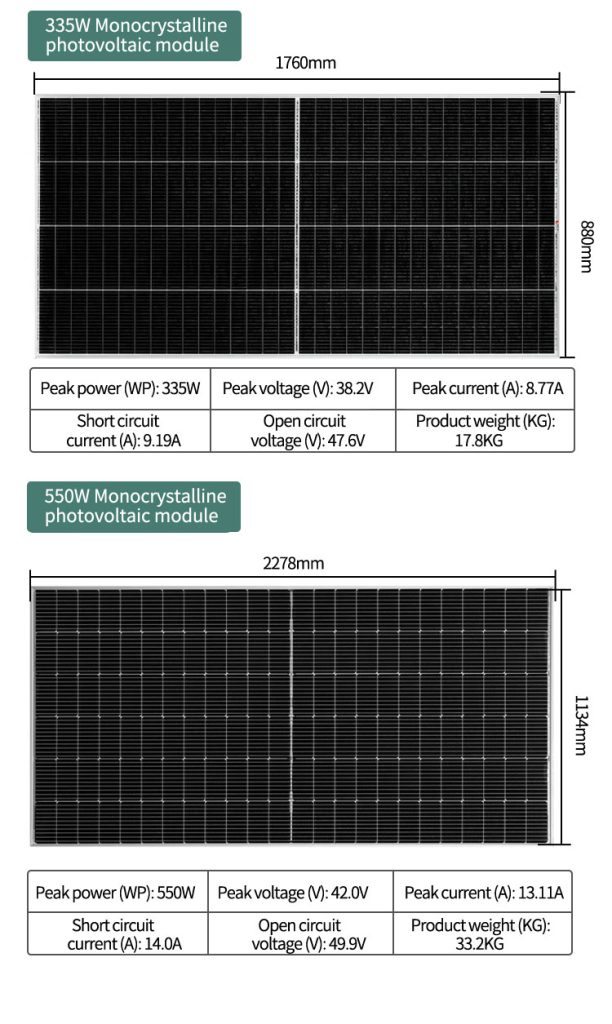
Technology as a Price Driver: The N-Type Takeover
The transition in cell technology is a major factor influencing price tiers. The industry is rapidly moving from legacy P-type PERC cells to more efficient N-type technologies, primarily TOPCon, HJT, and BC cells. This shift creates a multi-tiered price market:
- Mainstream N-type (TOPCon): Now the volume leader, offering a balance of efficiency and cost. Project prices in China are typically in the 0.66-0.73yuan/W range.
- Premium N-type (HJT/BC): These high-efficiency technologies command a significant premium. HJT modules are priced around 0.72-0.83yuan/W, while advanced BC modules can reach 0.78-0.85yuan/W. They cater to projects where space is limited or maximum output is critical.
This technological stratification means that the simple question “what is the price of a solar panel?” is now obsolete. The relevant question has become: “what is the price for a specific technology and performance level?”
Market Reactions and Future Outlook
The rising price environment is already triggering adjustments across the industry.
- Downstream Adaptation: Some project developers and governments, who budgeted during the low-price era, now face challenges. Reports from China show tender cancellations as bids exceeded budgets or manufacturers faced margin pressure.
- The Value Over Volume Mindset:The price correction allows manufacturers to abandon loss-making scale expansion for sustainable, innovation-driven profitability.The future will favor companies with strong technological roadmaps, financial resilience, and robust supply chains.
- Geopolitical Reshaping: Dependence on a single, dominant supply region is now seen as a strategic risk. These shifts are accelerating manufacturing diversification globally, which will reshape supply chains and prices.
Conclusion
The global solar industry is at an inflection point. The era of ever-falling solar panel prices is over. A complex mix of policy, technology, and geopolitics now drives their trajectory, while utility-scale solar remains highly cost-competitive.
Stakeholders must understand that solar panel prices now reflect technology, regional policies, and long-term value. The future lies in a race for innovation and resilience, not just low cost, to secure solar’s key role in the energy transition.