When homeowners invest in solar panels, they often hear about the “25-year warranty” or “useful life” of the system. This leads to a common concern: Do solar panels simply stop working after 25 years? Do they need to be thrown away? The answer is far less dramatic — and far more encouraging — than most people imagine.
They Don’t Die — They Gradually Slow Down
Solar panels do not have an expiration date. Instead, they experience a slow, predictable decline in performance, a phenomenon known as degradation. The industry-standard degradation rate for modern monocrystalline and polycrystalline panels is about 0.5% to 0.8% per year.
Here’s what that actually means in practice:
| Year | Cumulative Degradation | Performance Remaining |
|---|---|---|
| 0 (new) | 0% | 100% |
| 10 years | 5-8% | 92-95% |
| 20 years | 10-16% | 84-90% |
| 25 years | 12.5-20% | 80-87.5% |
| 30 years | 15-24% | 76-85% |
So after 25 years, a typical solar panel still produces 80% to 88% of its original power. It does not suddenly stop working — it simply becomes a bit less efficient. Most manufacturers guarantee that panels will retain at least 80-85% of their rated output at the 25-year mark. In reality, many premium panels perform even better, often retaining 88-92% after three decades.
What Actually Causes Degradation?
Several physical and chemical processes slowly reduce a solar panel’s output over time:
1. Light-Induced Degradation (LID)
Within the first few hours of sunlight exposure, a small but permanent drop in efficiency occurs — typically 1-3%. This is caused by the interaction of sunlight with boron-oxygen defects in silicon wafers. It’s a one-time event, not a continuous process.
2. Potential-Induced Degradation (PID)
High voltage differences between the solar cells and the panel frame can cause ions to migrate within the cell, reducing performance. High-quality panels with anti-PID designs minimize this effect.
3. Thermal Cycling Stress
Day after day, panels heat up under the sun and cool down at night. This repeated expansion and contraction can cause microscopic cracks in the solder joints and cell interconnects, gradually increasing electrical resistance.
4. UV Exposure
The encapsulant material (usually EVA — ethylene vinyl acetate) slowly yellows under prolonged UV exposure, reducing the amount of light reaching the cells by a few percentage points.
5. Humidity and Corrosion
Moisture can eventually penetrate the panel’s edge seals, leading to corrosion of the metal fingers on the cell surface or the junction box connections.
Beyond Performance: Physical Wear
Performance degradation isn’t the only change over 25 years. You may also notice:
- Yellowing or browning of the backsheet or encapsulant (cosmetic, affects output slightly)
- Frame discoloration — aluminum frames may oxidize, but this does not affect function
- Minor delamination at the edges in lower-quality panels
- Accumulated grime — though regular cleaning solves this regardless of age
However, catastrophic failures after 25 years are rare for quality panels. Most panels that fail do so within their first five years due to manufacturing defects — not old age.
What Does the 25-Year Warranty Actually Cover?
This is where many homeowners get confused. A typical solar panel warranty has two parts:
Performance Warranty (usually 25-30 years): Guarantees that the panel will produce at least a certain percentage (e.g., 80-85%) of its nameplate power by year 25. If your panels fall below this threshold, the manufacturer will replace or compensate you — though this rarely happens.
Product Warranty (typically 10-12 years): Covers manufacturing defects, such as cracked cells, junction box failures, or delamination. This is the warranty period for “breakage” issues.
Importantly, the expiration of the product warranty does not mean the panels are useless — it simply means the manufacturer no longer covers defects. Panels routinely operate for 30, 35, or even 40 years with no issues.
Real-World Evidence: Solar Panels Last Longer Than Predicted
The best data comes from systems installed in the 1980s and 1990s, which have now been operating for 30+ years.
- A 1980s Kyocera panel array in Switzerland was tested after 30 years and found to be operating at 79% of original power — essentially meeting the warranty guarantee decades later.
- The first grid-connected solar system in Germany (installed in 1984) was still generating power after 35 years, albeit at reduced output.
- More recent studies from NREL (National Renewable Energy Laboratory) analyzed 54,000 panels and found the median degradation rate was just 0.5% per year — meaning a typical panel would still be at 86% after 30 years.
These real-world results confirm that manufacturers’ degradation estimates are generally conservative. Most panels outlast their warranties.
Options at the End of the Useful “Life”
Even after 25-35 years, you have several choices — none of which involve simply throwing panels in a landfill.
Option 1: Keep Them Running
The most common outcome. Panels still producing 80-85% of original power are perfectly functional. You may decide to simply keep using them for another 10-15 years. There is no law or technical reason forcing you to remove them at 25 years.
Option 2: Repower — Replace Only the Panels
If you want to restore or increase your system’s output, you can replace the old panels with new, more efficient ones while keeping the racking, wiring, and inverter (assuming the inverter is still functional or also replaced). This is often the most cost-effective upgrade path.
Option 3: Relocate to Less Demanding Applications
Old but functional panels can be moved to applications where efficiency matters less:
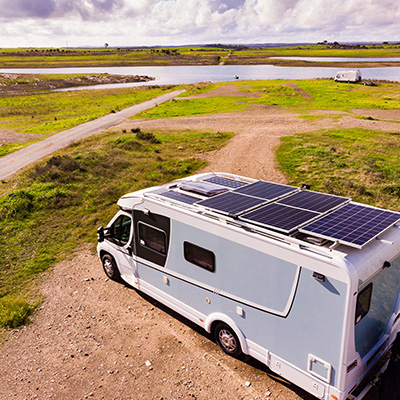
- Off-grid cabins, RVs, or boats
- Solar water pumping for agriculture
- Charging stations for garden equipment
- Community solar projects with lower space constraints
Option 4: Recycle — A Growing Industry
This is the most environmentally responsible choice when panels truly reach end-of-life. Solar panel recycling has become a rapidly expanding industry. Current recycling processes recover:
| Material | Recovery Rate |
|---|---|
| Aluminum frame | 100% |
| Glass | 90-95% |
| Silicon cells | 85-90% |
| Copper wiring | 95% |
| Silver (small amounts) | 90%+ |
| Plastic/encapsulant | Typically incinerated for energy |
The EU’s Waste Electrical and Electronic Equipment (WEEE) Directive already mandates solar panel recycling, and similar regulations are rolling out in parts of the US, Australia, and Asia. As panel volumes grow, recycling costs are falling rapidly.
Option 5: Sell or Donate
Used solar panels retain value. A quick search on resale markets shows 15- to 20-year-old panels selling for $30-80 each, depending on condition and efficiency. Donating them to schools, non-profit organizations, or developing countries via programs like the nonprofit “Solar Electric Light Fund” is another meaningful option.
The Inverter: A Different Story
While solar panels age gracefully, inverters have a much shorter lifespan — typically 10 to 15 years. String inverters are often replaced once or even twice during a panel’s 30-year life. Microinverters and DC optimizers generally last longer (15-25 years) but may still need replacement before the panels do.
This is important to understand because an inverter failure can make a perfectly good array appear “broken.” If your 20-year-old system stops working, don’t blame the panels — check the inverter first.
Environmental Math: Is It Still Green After 25 Years?
Yes. Even accounting for degradation, the environmental payback remains overwhelmingly positive.
A typical solar panel produces enough energy to offset its manufacturing emissions within 1 to 3 years. Over a 25-year life, it avoids roughly 30 to 50 times the carbon emissions that were created to produce it. Even at 80% efficiency in year 25, each additional year of operation is nearly pure environmental benefit.
What You Should Do as a Solar Owner
If your system is approaching or passing the 25-year mark:
- Monitor performance annually — Compare current output to original production (adjusting for weather). A sudden drop may indicate a failed component, not age-related degradation.
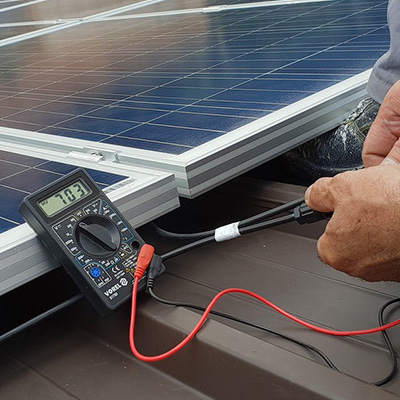
- Inspect physically — Look for discoloration, edge delamination, or corrosion.
- Check your inverter — If you’re on your original inverter beyond 15 years, consider proactive replacement before it fails.
- Clean the panels — Dust and grime accumulation over decades can reduce output by 5-15%. A good cleaning often restores significant performance.
- Consider repowering — If your roof or land space is limited, replacing old panels with modern (20-25% efficient vs. 12-15% efficient from 25 years ago) panels can drastically increase total generation.
Conclusion: The 25-Year “Myth”
The notion that solar panels “expire” at 25 years is a myth. They don’t shut down, implode, or become instantly useless. Instead, they slowly — very slowly — become slightly less productive. After 25 years, a quality solar panel still generates 80-88% of its original power, and it will likely continue operating for another 10-20 years beyond that.
The real conversation about “what happens after 25 years” should focus not on disposal, but on opportunity: do you keep a perfectly functional, paid-off asset? Repower with modern high-efficiency panels? Repurpose the old panels for less demanding applications? Or recycle them into raw materials for new products?
Solar panels are not milk cartons with a hard expiration date. They are durable, long-lived assets that continue delivering clean energy — and financial savings — long after their warranty paperwork has aged to yellow. The 25-year “milestone” is not an ending. It’s simply a point along a much longer journey.